



Please follow us on Gab, Minds, Telegram, Rumble, Truth Social, Gettr, X, Youtube, Instagram
Wall Street has a collateral problem it has never had to underwrite before, and it is exactly the problem that is getting baked into the terms being negotiated for the artificial intelligence buildout of SpaceX.
The lenders behind the approximately $40 billion financing for SpaceX's Nvidia graphics processing units have pressed for a number of conditions to be included in the deal. Most notably, according to the Financial Times, they have sought to place restrictions on where the hardware can be sent.
If for any reason the borrower fails to pay down the debt, the creditors will seek to recover their collateral in the form of fully paid servers. A rack of servers in a Tennessee data center can easily be repossessed, transported to a storage facility and sold off to other companies. But a rack of servers in orbit above the Earth is a very different beast. Even if the servers are still there and of value, they are completely out of reach.
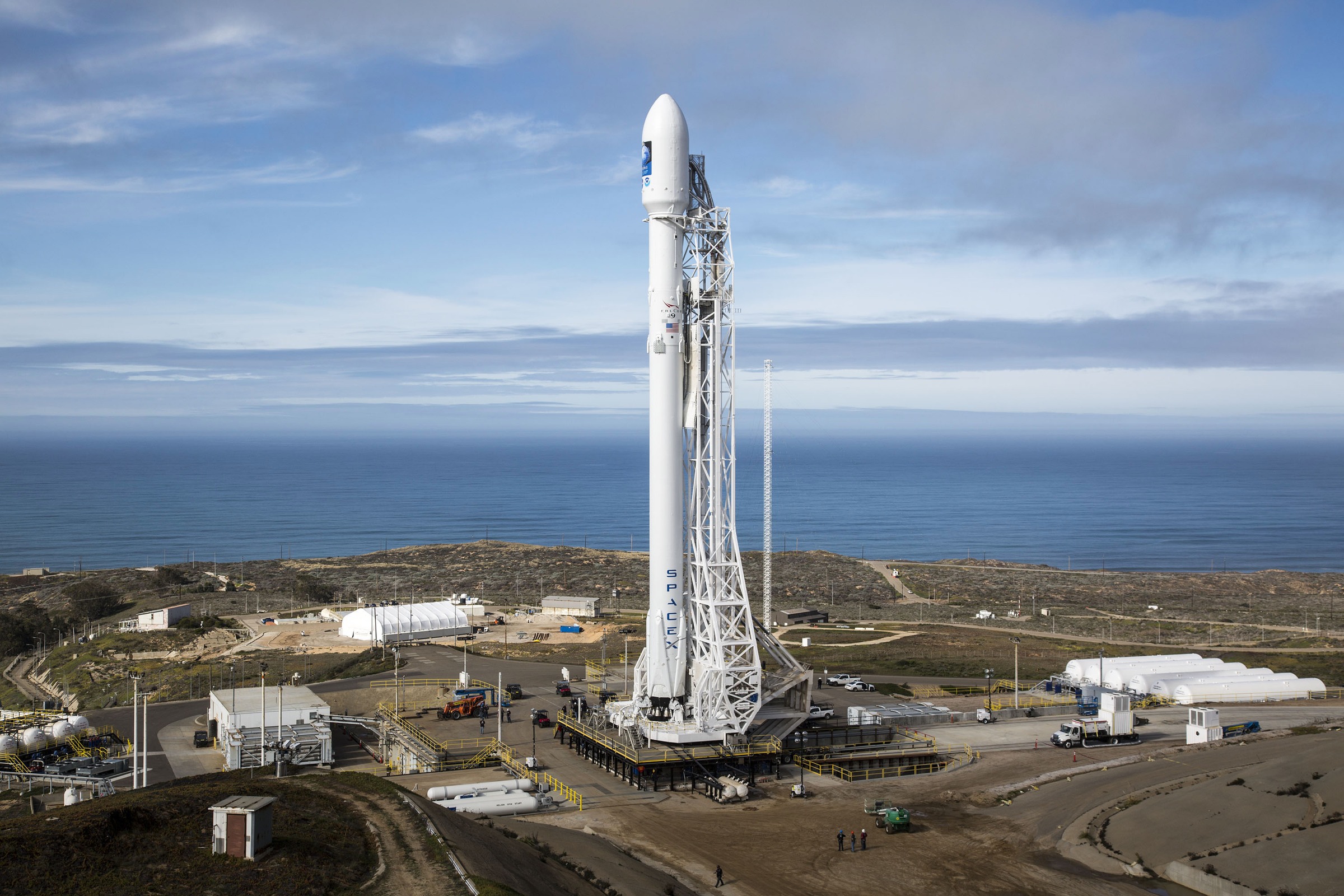
Musk's own ambitions to take computing to space include plans to develop orbital data centers that run off sunlight. The first Starmind satellite prototypes are set to launch in the third quarter of 2027. At the New York Times DealBook Summit on November 18, Musk said he believes computing in space is going to become very important.
Meanwhile, the new GPUs will be used on Earth to run SpaceX's AI program Grok and serve the cloud computing needs of SpaceX's customers. It remains unclear whether or not these restrictions are ultimately preserved in the final documentation, because financing of orbital assets typically requires specialized provisions to address the unique risks and challenges of such assets.
The financing, which was priced on November 20, consists of senior and subordinated notes offered by Apollo Global Management and Goldman Sachs in a transaction set to become the largest of its kind, with approximately $44 billion of notes priced. Investors bought more than $30 billion of the debt.
The anchor investment consisted of $25 billion of investment grade senior debt to be repaid from SpaceX's lease payments over five years of GPU deliveries and related equipment leases.
The yield on the largest tranche of the notes was above 8 percent, compared with about 7.2 percent on SpaceX debt due in 2031. That premium reflects the value of the collateral and the difficulty of realizing on it. Funds managed or advised by BlackRock, Goldman Sachs Asset Management and KKR were among the backers.
The financing agreement was disclosed by SpaceX on October 26 in a binding commitment to an approximately $40 billion master finance lease with an entity managed by Apollo. The commitment covers next-generation Nvidia Vera Rubin systems and deliveries are expected to start in the first half of 2027, with payments due as the systems are delivered. SpaceX called it the largest committed GPU financing ever, beating the $36 billion structured notes deal entered into this summer to finance the lease of chips to be used by Anthropic, with Broadcom as partner.
The excitement over the SpaceX orbital AI data center plan, which Musk said would use sunlight in space to power processing, overlooks one basic fact. In space, computers must dissipate heat in a vacuum, must survive in the face of radiation, must operate over a wide temperature range, and can only communicate with limited bandwidth. And in space, failed computer components cannot be swapped out by a technician. Every kilogram of computer hardware must be launched into space by the Starship rocket, which made progress in November testing but has yet to prove routine, low-cost reuse.
For now, the money is still flowing. But it is an old question on a very new asset class and it bears restating. When the most advanced computer chips on the planet are your collateral and you are the only company with a rocket to move them, who exactly holds the lien?
The risk to lend to SpaceX cannot be covered. You cannot repossess a GPU in orbit. Wall Street just found out what that is worth.




Get the latest on NYC and the Empire State delivered straight to your inbox